Discover Paris's most iconic monument. Book your Eiffel Tower tickets with summit access and enjoy an exceptional panoramic view over the French capital.
Adults: From €35
Youth (12-24): From €17.50
Children (4-11): From €8.80
Free: Under 4
Daily: 9:30 AM - 11:45 PM
Summer (mid-June to early Sept): 9:00 AM - 12:45 AM
Last ascent: 45 min before closing
Total height: 330 meters
2nd floor: 115 meters
Summit: 276 meters
Per year: 7 million
Since 1889: Over 300 million
World's most visited paid monument
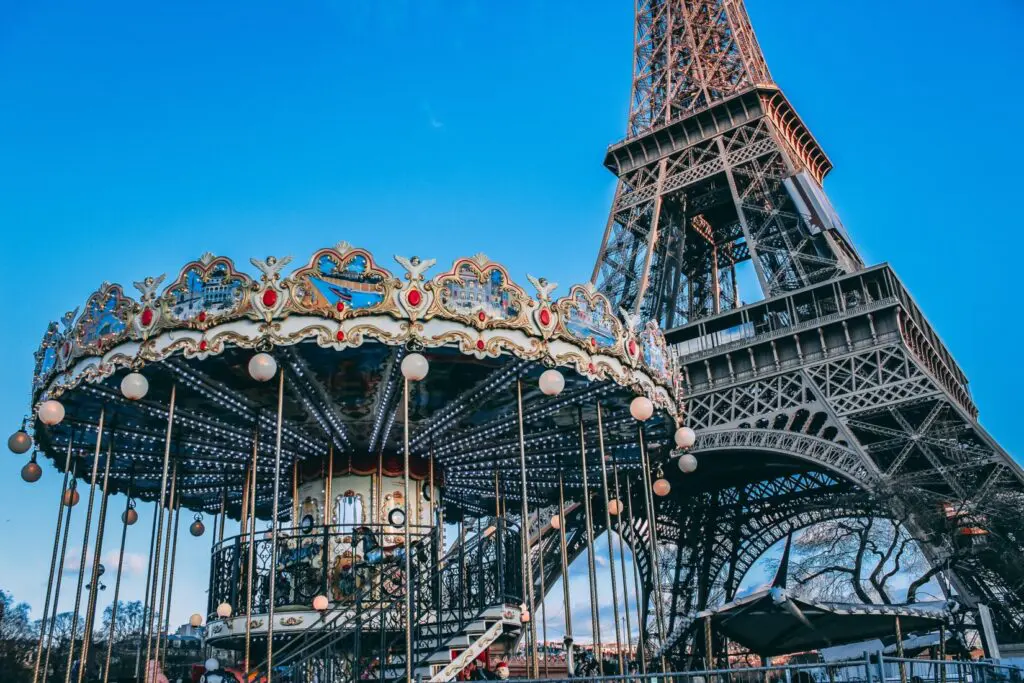
The Eiffel Tower, nicknamed the "Iron Lady," is undoubtedly Paris's most iconic monument and one of the world's most visited tourist sites. Built by Gustave Eiffel for the 1889 World's Fair, this 330-meter-tall metal structure was originally planned to be dismantled after 20 years. Today, it welcomes nearly 7 million visitors each year and remains the undisputed symbol of the French capital.

Visiting the Eiffel Tower is an unforgettable experience offering spectacular panoramic views over Paris. Whether you choose to ascend to the second floor or all the way to the summit, you'll discover the city from a unique angle, with breathtaking perspectives on Parisian landmarks: the Arc de Triomphe, Sacré-Cœur, Notre-Dame, the Louvre, and the Seine winding through the capital.
The Eiffel Tower was designed by engineers Maurice Koechlin and Émile Nouguier, then drawn by architect Stephen Sauvestre, before being built under the direction of Gustave Eiffel. Construction began in January 1887 and was completed in March 1889—in just 2 years, 2 months, and 5 days, a remarkable technical feat for the era.
The structure consists of 18,038 metal pieces assembled with 2.5 million rivets. It weighs approximately 10,100 tons and requires 60 tons of paint to be fully recoated every 7 years. The building sways slightly in the wind and can expand by up to 15 centimeters in height during summer heat waves.
Initially criticized by some Parisian artists and intellectuals who considered it a "metal eyesore," the Eiffel Tower eventually won the hearts of Parisians and people worldwide. It was due to be dismantled in 1909, but its usefulness as a radio transmission antenna allowed it to survive and become the universal symbol of Paris.
Eiffel Tower tickets can be purchased in several ways, but online booking is strongly recommended to avoid long queues that can last several hours, especially during the high tourist season (April to October).
Online booking offers many advantages. It guarantees you a specific time slot, lets you skip the ticket office lines, and ensures access to the monument even on busy days. Online tickets can be reserved up to 60 days in advance on the official website or through partner platforms like GetYourGuide.
When booking, you'll need to choose between several options: second-floor access by stairs, second-floor access by elevator, or summit access by elevator. Summit access tickets are the most in-demand and sell out quickly, so it's advisable to book as early as possible.
It's also possible to buy tickets directly at the ticket offices at the foot of the Eiffel Tower. However, this option has several drawbacks: queues can be very long (up to 2-3 hours during high season), and there's no guarantee of availability, especially for summit access.
If you opt for on-site purchase, prioritize opening time (9:30 AM) or late evening after 7:00 PM when crowds thin out. Tickets to climb the stairs to the second floor are generally easier to obtain and are an interesting alternative for visitors in good physical shape.
Eiffel Tower rates vary according to the type of access chosen and visitors' ages. Here is a detailed overview of prices for 2026:
Adults (25 and over): €29.40 – This rate includes access to the 2nd floor and summit by elevator.
Youth (12-24): €14.70 – Reduced rate on presentation of ID.
Children (4-11): €7.40 – Preferential rate for younger visitors.
Children under 4: Free – Free access for little ones.
Disabled persons and companion: €7.40 – Reduced rate on presentation of proof.
Adults: €18.80
Youth (12-24): €9.40
Children (4-11): €4.70
Children under 4: Free
Adults: €11.80 – Budget option for the athletic (674 steps).
Youth (12-24): €5.90
Children (4-11): €3.00
Children under 4: Free
Important note: Rates through online booking platforms like GetYourGuide may include additional service fees, but often offer benefits such as free cancellation, guaranteed time slots, and sometimes included guided tours.
The Eiffel Tower consists of three levels accessible to the public, each offering different experiences and views over Paris.
The first floor, located at 57 meters high, has been completely renovated and now offers an immersive, interactive experience. You'll find the glass floor, a transparent surface offering a dizzying view of the ground below, as well as explanatory panels on the Tower's history and construction.
This level is also home to the 58 Tour Eiffel restaurant (recently renamed Madame Brasserie), which offers refined French cuisine in an exceptional setting. Temporary exhibitions and cultural spaces help you better understand the monument's history and its impact on Parisian culture.
The second floor, at 115 meters high, is considered by many to offer the best view of Paris. At this altitude, you benefit from an ideal perspective to admire Parisian monuments and understand the city's geography, without being too high to make out details.
This level has souvenir shops, a quick-service dining area (buffet), and numerous observation points with panels indicating the monuments visible in each direction. Binoculars are available to observe Paris up close. This is also where you'll find the gourmet restaurant Le Jules Verne, awarded a Michelin star.
The summit of the Eiffel Tower, accessible only by elevator from the 2nd floor, rises to 276 meters. It's the highest point accessible to the public in Paris, offering a 360-degree panoramic view over the capital and its surroundings, with visibility reaching 60 kilometers on clear days.
At the summit, you'll discover the recreated office of Gustave Eiffel with wax figures representing the engineer receiving Thomas Edison. A champagne bar lets you celebrate your ascent with a glass of French champagne while admiring the spectacular view. Orientation panels help you identify the monuments and neighborhoods of Paris visible from this impressive height.
The Eiffel Tower is open every day of the year, including public holidays, with hours that vary slightly by season.
September 1 to June 15: 9:30 AM - 11:45 PM (last ascent at 11:00 PM for summit, 11:30 PM for lower floors)
June 16 to August 31: 9:00 AM - 12:45 AM (last ascent at 12:00 AM for summit, 12:30 AM for lower floors)
Stairs access: 9:30 AM - 6:30 PM (closes earlier than elevators)
Sunrise: For early risers, arriving at opening time lets you avoid the crowds and enjoy magnificent morning light over Paris. The atmosphere is peaceful and you'll have more space for photos.
Sunset: This is the most coveted and magical time to visit the Eiffel Tower. You can admire Paris bathed in the golden light of dusk, then watch the city gradually light up as night falls. Book your time slot about 1.5 hours before sunset to fully enjoy this transition.
Night: A night visit offers a completely different experience, with Paris illuminated as far as the eye can see. The lit monuments create a fairy-tale spectacle. In addition, every hour after nightfall, the Eiffel Tower sparkles for 5 minutes—a light show visible from viewpoints throughout Paris.
Weekdays outside school holidays: To avoid the largest crowds, favor Tuesdays, Wednesdays, and Thursdays outside French and European school vacation periods. Weekends and holidays are naturally busier.
The Eiffel Tower is located in Paris's 7th arrondissement, on the Champ de Mars, near the Seine. It's easily accessible by various means of transport.
Line 6: Bir-Hakeim station (10 minutes on foot) – This above-ground line offers a magnificent view of the Eiffel Tower when crossing the Seine.
Line 9: Trocadéro station (15 minutes on foot) – This option brings you through the Trocadéro gardens, offering the most iconic view of the Eiffel Tower for your photos.
Line 8: École Militaire station (15 minutes on foot) – Access via the Champ de Mars.
RER C: Champ de Mars - Tour Eiffel station (5 minutes on foot) – The closest stop to the monument. The RER C also serves Versailles, making it easy to combine both visits in the same day.
Several bus lines serve the Eiffel Tower: lines 42, 69, 82, 87 – Tour Eiffel or Champ de Mars stop.
Tour bus: Hop-on hop-off buses all include an Eiffel Tower stop on their routes.
The Batobus, a Seine river shuttle, serves the Eiffel Tower with a dedicated stop. It's a pleasant and original way to reach the monument while enjoying a mini-cruise on the Seine.
Paris has an excellent network of cycle paths. Vélib' (bike-sharing) stations are available near the Eiffel Tower. Cycling along the Seine is particularly enjoyable.
Although possible, driving is not recommended due to heavy traffic and difficult parking in this very touristy neighborhood. If you must drive, use public parking: Parking Pullman Tour Eiffel (18 Avenue de Suffren) or Parking Joffre École Militaire (2 Place Joffre).
To make the most of your Eiffel Tower visit, here are some essential tips based on the experience of millions of visitors.
This is the most important tip: book your tickets online several weeks in advance, especially if you're visiting Paris during high season (April to October) or during school holidays. Summit tickets sell out very quickly and can be exhausted several weeks ahead.
Even with a reservation, arrive 15-20 minutes before your time slot. You'll need to go through security checks (similar to airports), which can take time during busy periods. Late arrivals risk losing their slot.
The Eiffel Tower applies strict security measures. Large bags, suitcases, and dangerous objects are prohibited. There is no baggage storage available, so travel light. Collapsible strollers are allowed but must be folded in the elevators.
At the summit, it can be much colder and windier than at ground level, even in summer. Bring a jacket or sweater, especially for evening visits. Comfortable shoes are essential, particularly if you're climbing the stairs (674 steps to the 2nd floor).
Allow at least 1.5 to 2 hours for a complete visit with summit access, including security checks, elevator queues between floors, and observation time at each level. If you want to take your time, take photos, and perhaps have a drink, plan for 2.5 to 3 hours.
Photos are permitted at all levels of the Eiffel Tower for personal use. However, tripods and selfie sticks are prohibited for safety and comfort reasons. The best photos of the Tower itself are taken from the Trocadéro, Champ de Mars, or Bir-Hakeim bridge.
Several dining options are available at the Eiffel Tower, from quick-service buffets to fine-dining restaurants. The Le Jules Verne restaurant (2nd floor) requires a separate reservation several weeks in advance. Madame Brasserie (1st floor) offers French cuisine in an elegant setting. Snack and drink kiosks are available at each level.
The Eiffel Tower is accessible to people with reduced mobility up to the 2nd floor via elevators. Summit access can be difficult due to limited space in the elevators from the 2nd floor to the summit. Reduced rates apply for disabled persons and their companion on presentation of proof.
Beyond the classic visit, several options allow you to enrich your Eiffel Tower experience.
Guided tours in French, English, and other languages are offered by expert guides who share the fascinating history of the Tower's construction, anecdotes about Gustave Eiffel, and information about the monuments visible from the different floors. These tours generally last 1.5 to 2 hours and include skip-the-line access.
Many packages combine an Eiffel Tower visit with a Seine cruise. This combination lets you discover Paris from two exceptional perspectives: from the heights of the Tower and at water level while cruising along the Seine. It's an excellent option to maximize your time and experience.
Dining at the Eiffel Tower is an unforgettable gastronomic experience. The Le Jules Verne restaurant, led by chef Frédéric Anton, offers refined French cuisine awarded a Michelin star. Madame Brasserie offers a more accessible alternative with quality French brasserie cuisine. Reservations for these restaurants must be made separately and well in advance.
The Eiffel Tower regularly hosts special events: illuminations for charitable causes, artistic projections, concerts at the Champ de Mars, and New Year's celebrations with spectacular fireworks. Check the official calendar for upcoming events during your visit.
The Eiffel Tower area offers many other attractions and activities to discover before or after your monument visit.
This vast public garden stretches from the foot of the Eiffel Tower to the École Militaire. It's the ideal spot for a picnic with a view of the Tower, to relax on the lawn, or to let children play in the playgrounds. The gardens are particularly pleasant in spring and summer.
Located on the other side of the Seine, the Trocadéro offers the most iconic and photographed view of the Eiffel Tower. The Trocadéro gardens, with their fountains and terraces, form a magnificent setting. The Palais de Chaillot houses several museums: the Musée de l'Homme, the Cité de l'Architecture et du Patrimoine, and the Musée de la Marine.
A 15-minute walk from the Eiffel Tower, the Invalides complex houses Napoleon Bonaparte's tomb under the golden Dome, as well as the Army Museum, one of the world's most important military museums. The immersive Aura Invalides show transforms the Dome into a stunning audiovisual experience.
Several companies offer cruises departing from the quays near the Eiffel Tower. Bateaux Parisiens and Bateaux Mouches offer one-hour commented cruises that let you discover Paris's main monuments from the Seine.
A few minutes' walk from the Eiffel Tower, this modern museum presents exceptional collections of arts and civilizations from Africa, Asia, Oceania, and the Americas. Its contemporary architecture and vertical garden make it a unique venue in Paris.
The Eiffel Tower and its illuminations are inseparable from Paris's nighttime image. Since its construction, the Tower has known various lighting systems that have evolved with technology.
The current lighting, installed in 1985, consists of 336 projectors equipped with high-pressure sodium lamps in a yellow-orange color that highlights the metal structure from within. This lighting turns on automatically at nightfall and turns off at 1:00 AM (2:00 AM in summer).
The Eiffel Tower's sparkle, added in 2000 to celebrate the new millennium, was so appreciated that it was kept. Every hour, for 5 minutes after nightfall, 20,000 bulbs sparkle across the entire structure, creating a fairy-tale spectacle visible from many points in Paris. The last sparkle occurs at 1:00 AM.
The Eiffel Tower is much more than a tourist monument—it's a global cultural icon that has inspired artists, filmmakers, writers, and creators from all walks of life.
In film, the Eiffel Tower appears in countless movies, from French classics like "Zazie in the Metro" to Hollywood blockbusters like "Inception" or "Ratatouille." It instantly symbolizes Paris and France in the world's collective imagination.
In literature, the Tower has been celebrated by poets like Guillaume Apollinaire and criticized by writers like Guy de Maupassant, who reportedly dined regularly at the Tower's restaurant because it was, he said ironically, the only place in Paris from which he couldn't see it.
The Eiffel Tower has also inspired numerous replicas around the world, from Las Vegas to Tokyo, but none equals the original Parisian one in terms of presence and cultural significance.
The Eiffel Tower is full of fascinating anecdotes that enrich your visit:
The Tower shrinks and grows: Depending on the temperature, the Eiffel Tower can vary by 15 centimeters in height. In hot weather, the metal expands and the Tower grows, while it shrinks in cold weather.
Gustave Eiffel had his apartment at the top: The engineer had set up a small private apartment at the summit of the Tower, where he received personalities like Thomas Edison. This apartment is now recreated and visible to visitors.
The Eiffel Tower was meant to be destroyed: Built for the 1889 World's Fair, it was due to be dismantled 20 years later. Its usefulness as a radio transmission antenna saved it.
Hitler ordered its destruction: In 1944, during the Liberation of Paris, Hitler ordered General von Choltitz to destroy the Eiffel Tower and other Paris monuments. Fortunately, the general disobeyed that order.
A con artist "sold" it twice: In 1925, Victor Lustig, a notorious con man, managed to "sell" the Eiffel Tower to a scrap metal dealer by posing as a government official. He repeated the scam a second time before fleeing abroad.
The Tower changes color: The Eiffel Tower is repainted every 7 years, an operation requiring 60 tons of paint and 18 months of work. The current color, called "Eiffel Tower brown," is actually composed of three different shades—darker at the bottom and lighter at the top—to optimize visual appearance.
Address: Champ de Mars, 5 Avenue Anatole France, 75007 Paris
Official website: www.toureiffel.paris
Phone: +33 (0)8 92 70 12 39
Recommended visit duration: 2 to 3 hours
Available languages: Audioguides in French, English, Spanish, German, Italian, Portuguese, Japanese, Chinese, Russian, Hindi, Arabic
Free WiFi: Available at all levels
Restrooms: Available at all levels
Shops: Souvenirs available at each level
To guarantee your Eiffel Tower visit and avoid disappointment, we strongly recommend booking your tickets online in advance. Our partner GetYourGuide offers summit access tickets, flexible cancellation options, and 24/7 English-speaking customer service.
Tickets typically include skip-the-line access, letting you maximize your time in Paris without losing precious hours in queues. Some packages combine an Eiffel Tower visit with other Paris attractions or Seine cruises for a complete experience.
Book your tickets now and live an unforgettable experience at the summit of Paris's symbol
Book Your Tickets